

The Lost Boys Lands on Broadway
photos via Tricia Baron
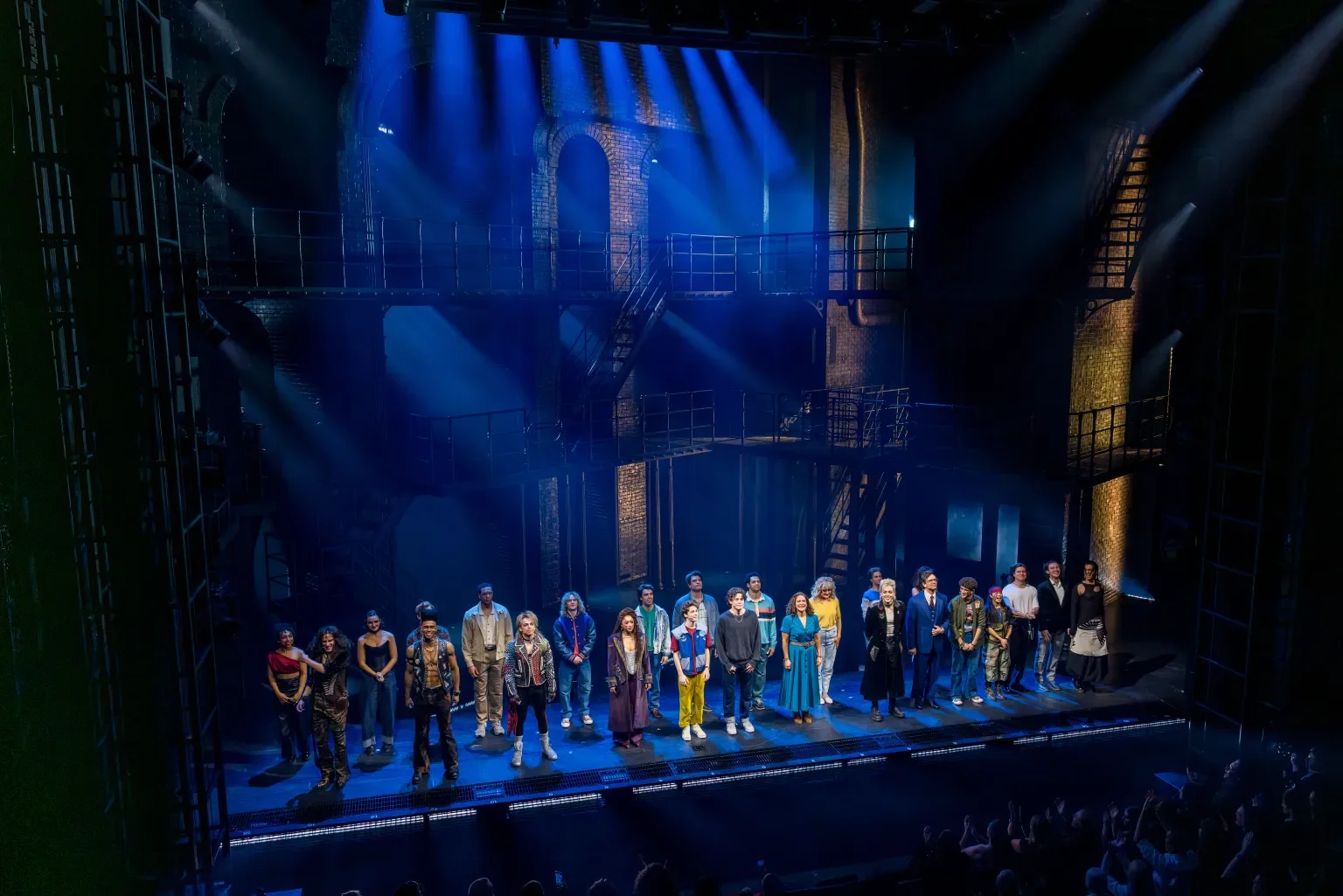
The Lost Boys musical takes its plot from the cult classic 1987 horror-comedy film directed by Joel Schumacher and written by Janice Fischer, James Jeremias, and Jeffrey Boam. In 1987, hoping to heal from old wounds, the Emersons are thirsting for change when they move from Phoenix, Arizona to Santa Carla, California, unfortunately the Murder Capital of the World, papered with missing-person posters that feel less like set dressing and more like warning signs.
Lucy Emerson’s sons encounter the potential for belonging in very different forms. For the teenage Michael, it’s a found family of vampires led by the predatory David; for the younger Sam, it’s a pair of comic-obsessed, Rambo-loving vampire hunters, the Frog brothers. As Michael is pulled deeper into David’s orbit, along with Star, the half-vampire tasked with luring him in, he’s drawn toward a transformation he can’t fully name, let alone resist.
The story is not associated with Peter Pan, but the title still carries that same eerie promise: a world where no one has to grow up, because no one ever really gets the chance. On opening night, that idea feels reframed through a distinctly youthful lens, a cast tasked not only with carrying the spectacle of a Broadway production, but its emotional architecture too.
photos via Tricia Baron
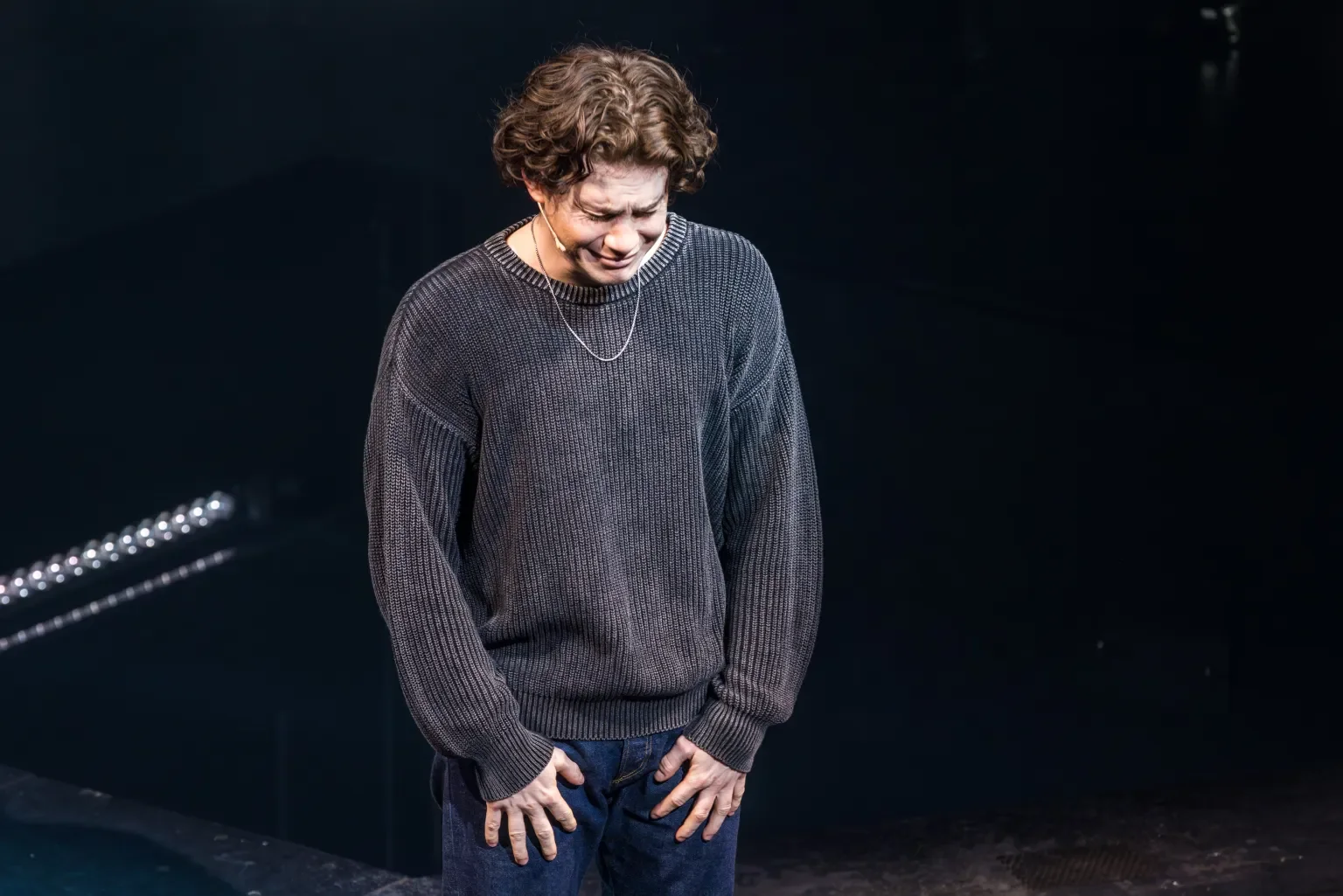
LJ Benet, making his Broadway debut as Michael Emerson, anchors the show with a performance that feels immediate and searching. That throughline is most clearly articulated in “Belong to Someone.” The song lays bare Michael’s desire for connection, and onstage, that longing becomes the spine of Benet’s performance, charting a push and pull between home, identity, and the seductive clarity of escape.
Opposite him, Ali Louis Bourgui's David sharpens that tension, playing less as a caricature of danger and more as a figure of control, someone who understands exactly how to weaponize belonging. It’s a dynamic that underscores much of the show’s underlying concern: who gets to define power, and how easily it can be inherited, replicated, or resisted.
That question begins to take on a broader frame in the show’s opening moments, which subtly layer in the political climate of the late ’80s. Ronald Reagan’s rhetoric around “family values” filters into the world of the play, casting a quiet shadow over the Emersons’ attempt to rebuild. Their move to Santa Carla starts to read less like reinvention and more like escape, from a version of family that has already fractured. The absence of a stable father figure isn’t incidental; it becomes part of the show’s larger meditation on cyclical patriarchal violence, and what it means to step outside of it.
photos via Tricia Baron
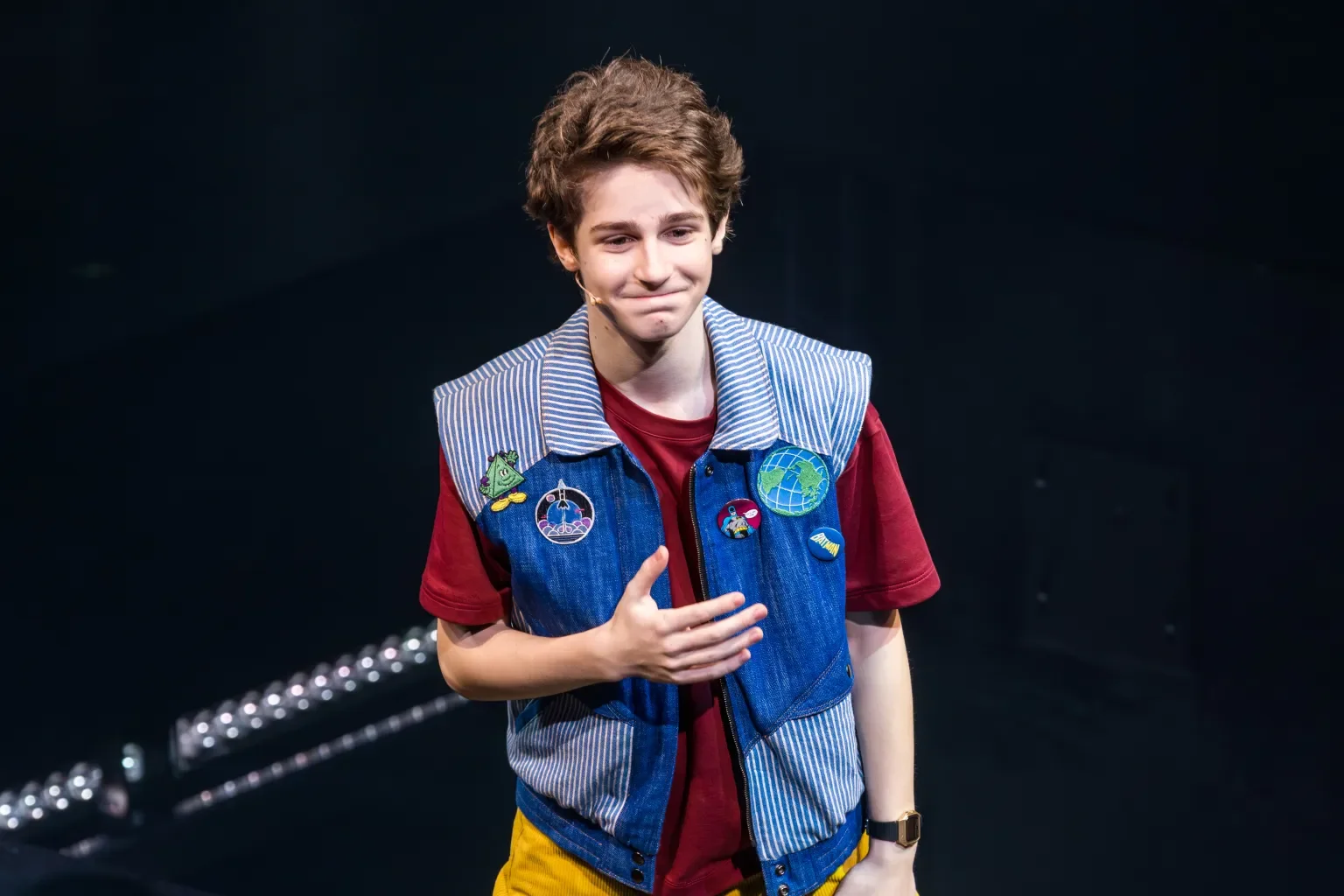
Within that, Benjamin Pajak’s Sam emerges as one of the adaptation’s most thoughtful evolutions. His storyline expands beyond comic relief into something more interior, more self-defined. It begins with a familiar image, the shirtless, oil-slicked saxophone player, played here by Cameron Loyal, but the framing shifts. What once registered as camp now lands as recognition, a fleeting but formative moment that signals the beginning of Sam’s queer self-awareness.
From there, his arc builds quietly. There’s no singular declaration, no overt pivot, just a steady accumulation of identity and purpose. His love of comics and monster lore positions him as a kind of self-made protector, but the added layer of queerness reframes that role entirely. In a narrative where masculinity is so often tied to dominance or absence, Sam offers something else: a version of strength that is constructed rather than inherited. There’s a subtle but unmistakable nod to being accepted as a kind of gay superhero, not in opposition to who he is, but because of it.
Across the production, the younger ensemble fuels much of the show’s movement and tone. The Lost Boys themselves function less as background players and more as a collective force, shaping the rhythm of the piece and mirroring the volatility of adolescence. Their presence keeps the show in constant motion, teetering between exhilaration and unease.
photos via Tricia Baron
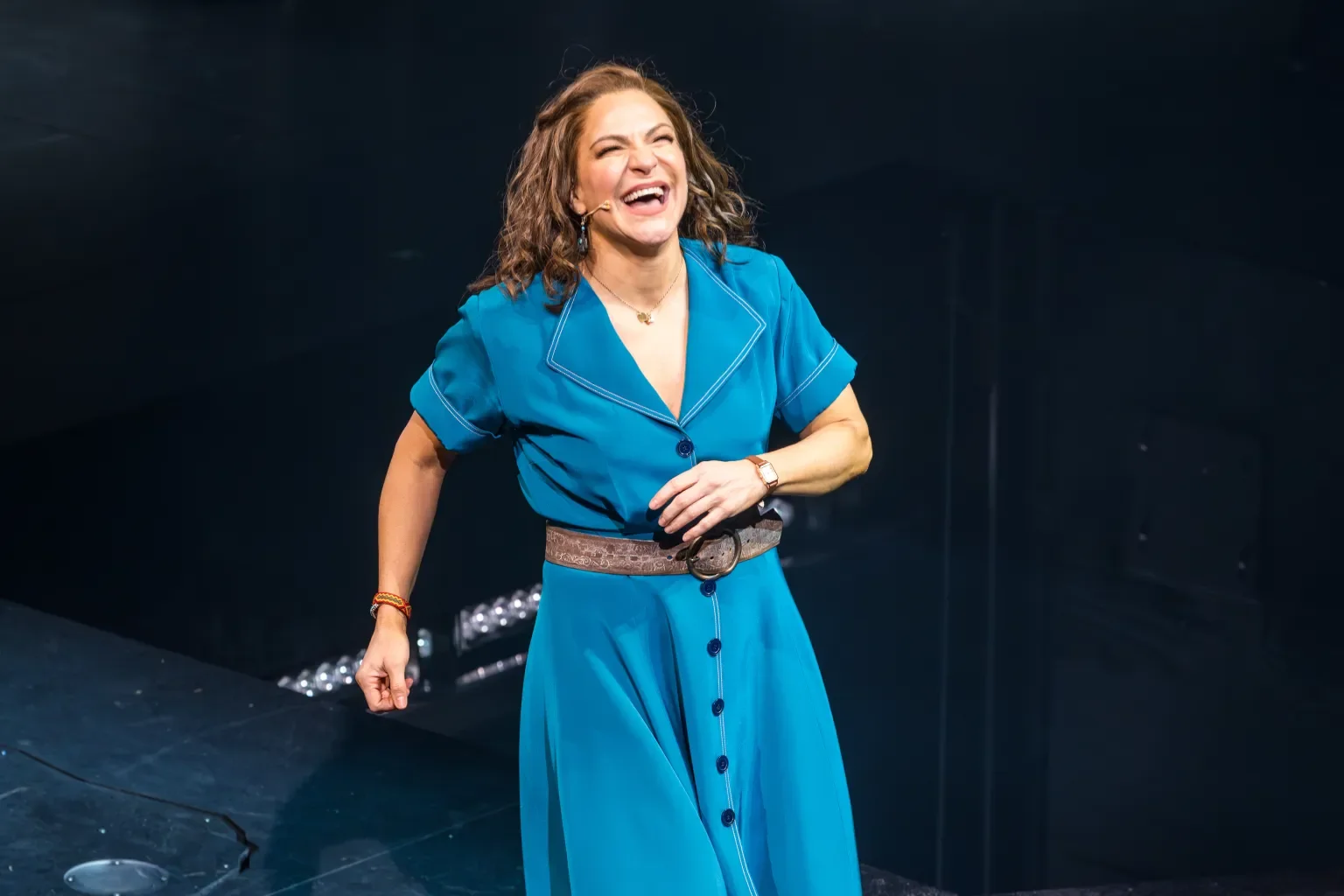
Shoshana Bean, as Lucy Emerson, grounds the story with a sense of adult perspective, though even she feels caught in the same currents of reinvention and instability. It’s a performance that underscores how little control any of these characters truly have over the systems they’ve inherited.
Taken together, opening night makes clear that The Lost Boys is less about vampires than it is about the search for belonging, and the cost of finding it in the wrong place. “Belong to Someone” operates as both thesis and warning, threading through the production as a reminder that connection, in this world, is never neutral. What this adaptation does best is widen that idea: suggesting that breaking from the past doesn’t always come through spectacle, but through smaller, more deliberate acts of self-definition.
